
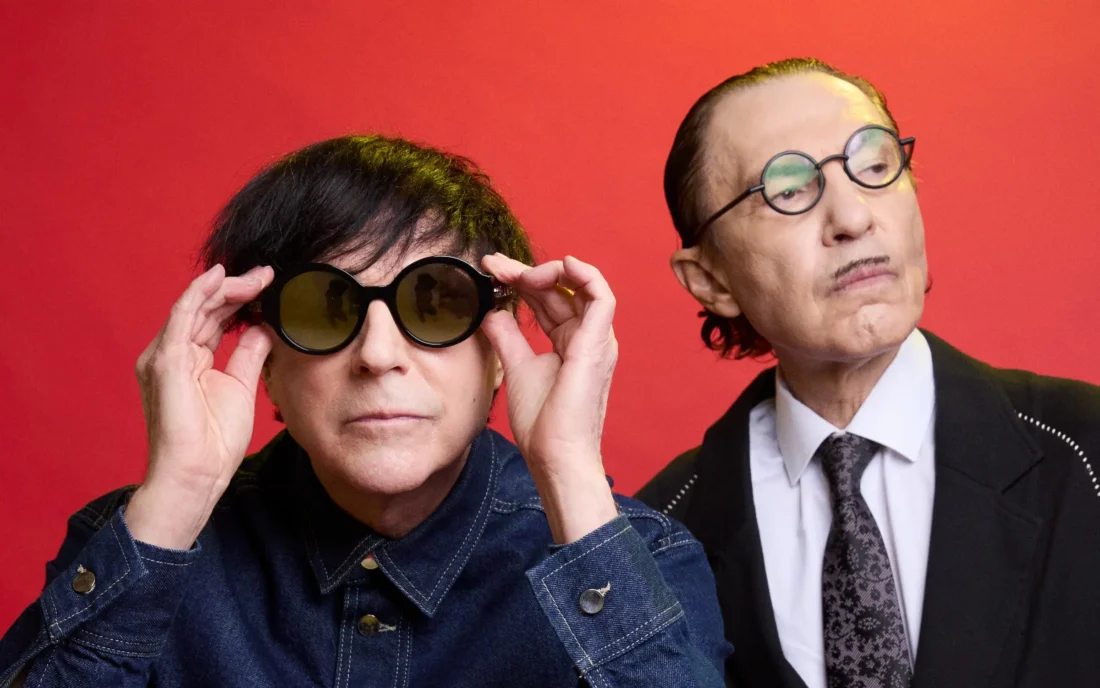
Sparks Are Still Chasing the Future
By Sean Sennett
There are legacy acts who carefully preserve their past, and then there’s Sparks — a band still driven by curiosity, experimentation and the strange thrill of not repeating themselves. More than five decades after brothers Ron and Russell Mael first emerged from Los Angeles with their gloriously eccentric art-pop vision, Sparks are once again enjoying a major cultural moment thanks to acclaimed albums, sold-out tours, Edgar Wright’s celebrated documentary The Sparks Brothers and their cinematic collaboration Annette. Ahead of the band’s upcoming Australian tour, Russell Mael caught up with Time Off to talk about Laurel Canyon, The Doors, AI, British pop culture, working with Gorillaz and why Sparks are still creatively restless after all these years.
It was such a nice surprise to see Sparks coming back to Australia so soon after the last tour. What brought that about?
Well, we had a tour planned for Japan already, and then feelers were put out about coming back to Australia and also going to New Zealand for the first time. It all came together really quickly. We had such a great time on that last tour, and we really loved Brisbane. We stayed a couple of extra days after the show. It was actually the first time we’d ever been there.
You formed Sparks in Los Angeles in the late ’60s. What was the scene like back then? Were you seeing bands like The Doors on the Sunset Strip?
Yeah, we were massive fans of The Doors and Love. The Doors had so many great songs, and Love too. They had a completely different sensibility from the whole Laurel Canyon thing happening in LA at the time. That more laid-back denim-and-acoustic-guitar culture wasn’t really our taste.
We were also huge Anglophiles, so we gravitated towards British bands because they cared about presentation, image and theatricality as much as the music itself. That really appealed to us.
But we were also huge fans of The Beach Boys. They reflected Los Angeles perfectly — the beaches, the cars, school spirit, all that Southern California mythology. Growing up in LA, that was a huge thing for us.
Did Los Angeles itself feel like a dream factory when you were growing up?
I don’t know if we saw it exactly that way. We kind of naively stumbled into what we were doing because we enjoyed it. Ron and I were both at UCLA and music simply became more interesting to us than school.
We were fortunate someone like Todd Rundgren heard something unique in what we were doing. He signed us, produced our first album and really believed in us. That gave us the confidence to keep going.
Moving to London must have felt inevitable for two Anglophiles.
Absolutely. It was a dream for us. We got this offer from Island Records to relocate to London and reform the band there. We went over with no songs prepared at all.
But they had faith in us from those first two albums. Then suddenly “This Town Ain’t Big Enough for Both of Us” became this massive hit completely out of the blue.
Your voice is still remarkable live. Was that style something you had to discover?
No, it was always there. I think a lot of it came from the songs Ron was writing. He’d write these acrobatic melodies that went all over the place — really high, then suddenly low again.
I never questioned it. He’d present the melody and I’d just sing it. The songs dictated the style.
“When I’m With You” was a huge hit in Australia. What does that song mean to you now?
I really love that song. It’s simple, but also kind of complex. It’s a relationship song, but it’s also reflecting on itself while it’s happening.
There’s that section where it says, “Here’s the break in the song where I should say something special.” So the song becomes self-aware in the middle of itself.
Will you be featuring much of the latest album in the live set?
Definitely. We genuinely think the new album is really special. It became our highest-charting album ever in the UK, which is kind of crazy considering it’s our 28th album.
A lot of artists with long careers tend not to stand behind newer material, but we really believe in this record.
It feels like Sparks are suddenly back in the cultural zeitgeist again. Did the Edgar Wright documentary impact that?
Oh absolutely. We owe so much to Edgar Wright for wanting to make that documentary and making it in such a fresh way.
It really resonated with creative people. Anyone working in any artistic field seemed to connect with the story.
At the same time we had Annette come out, which opened us up to another audience entirely through cinema.
And what a cast Annette had.
We couldn’t have asked for more. Having Adam Driver and Marion Cotillard singing your songs and delivering your dialogue was unbelievable.
Then suddenly we’re at the Cannes Film Festival on the red carpet between Adam Driver and Marion Cotillard. For us as cinema buffs, it couldn’t get much better.
How’s the Sunny Angels collection going?
Getting bigger by the day. Whenever we go to Japan I always have to hunt them down.
The frustrating thing is they’re making fewer new ones now, so the Sunny Angel company needs to step up its game a little.
How many would you own now?
Oh God… maybe close to 100? Somewhere around there. It’s endless because they randomise the boxes so you never know which one you’re getting.
You and Ron have such a fascinating working relationship. Is it still office hours every day?
Not quite as strict as that anymore. During recording periods it becomes very intensive, but now we can work separately as well.
Ron might work at his place and bring over a fully formed song, or I’ll work on something here and send it to him. But yes — we work a lot. We’re already writing new material now.
The new single with Gorillaz is fantastic. How did that collaboration come together?
Gorillaz sent us the beginnings of “The Happy Dictator” while Damon Albarn was in London and we were here in LA.
Ron came up with ideas musically and lyrically, we recorded our parts here and sent them back. Thankfully Damon liked what we added.
We’ve already performed it live together a few times and we’re doing a big stadium show together in London as well.
What are your thoughts on AI?
There are obviously positive applications in medicine and science, but creatively I’m really opposed to it.
When AI is used artistically, it’s based on existing ideas and previous data. Real creativity should come from the ground up. If it’s simply regurgitating previous work, then I think that’s dangerous creatively.
Technology has transformed music recording too.
That side of technology is incredible. Being able to record high-quality music at home has changed everything.
When we started, you were always at the mercy of expensive studios and huge recording budgets. You were constantly watching the clock.
Now you can experiment endlessly in your own home. That’s a genuinely positive thing.
Albert Grossman managing Sparks still sounds surreal.
We were amazed by it too. The idea that Bob Dylan’s manager heard something worthwhile in Sparks — especially those eccentric early albums — still feels incredible to us.
Working with Giorgio Moroder must have felt like stepping into the future.
Absolutely. Critics in the UK thought we were committing blasphemy because there were no guitars and suddenly we were electronic.
But the public got it immediately. Ironically, audiences were far more forward-thinking than the critics.
And later you had bands like New Order and artists from the synth-pop world talking about how influential No. 1 in Heaven had been.
Do you still actively seek out new music?
Absolutely. We’re always listening to new artists and new records.
Sometimes you hear something and think, “Wow, I wish we’d done that.” It’s harder to get genuinely excited by new music as you get older, but when something special appears, it’s still thrilling.
Sparks is such a perfect band name. How did it happen?
Our first album actually came out under the name Half Nelson. Todd Rundgren and Albert Grossman loved the album, but they thought the name was too obscure.
They joked that we were kind of like the Marx Brothers and maybe we should be “The Sparks Brothers”.
We hated that idea, so we chopped off the “Brothers” part and just became Sparks.
Then Edgar Wright went full circle and deliberately called the documentary The Sparks Brothers just to annoy us.
QPAC and Open Season presents Mogwai and Sparks
Where: QPAC Glasshouse Theatre, Cultural Precinct, South Bank, Brisbane 4101
When: Mogwai: Wednesday 27 May 2026 + Sparks: Saturday 30 May 2026
Tickets: Visit qpac.com.au/openseason or call 136 246