
When Australian Rock Came to Byron Bay: New Book Chronicles a Golden Era
From Cold Chisel and Midnight Oil to INXS, Australian Crawl and Split Enz, Tricia Shantz’s new book Musicland revisits the years when the Northern Rivers became a vital stop on Australia’s rock ’n’ roll highway.
Long before Byron Bay became an international tourist destination and celebrity playground, the Northern Rivers was home to one of the most vibrant music scenes in Australia.
Throughout the 1970s and ’80s, as Australian rock entered a golden era, an extraordinary procession of bands travelled the east coast, playing pubs, clubs and community halls between Melbourne, Sydney and Brisbane. Along the way, Byron Bay, Bangalow, Lismore and the surrounding towns became essential stops on the touring circuit.
Cold Chisel, The Angels, INXS, Midnight Oil, Mi-Sex, Mondo Rock, Australian Crawl, Split Enz, Redgum, Goanna and Richard Clapton were among the artists who passed through the region, performing to local audiences and helping establish a musical culture that would leave a lasting mark on Australian rock.
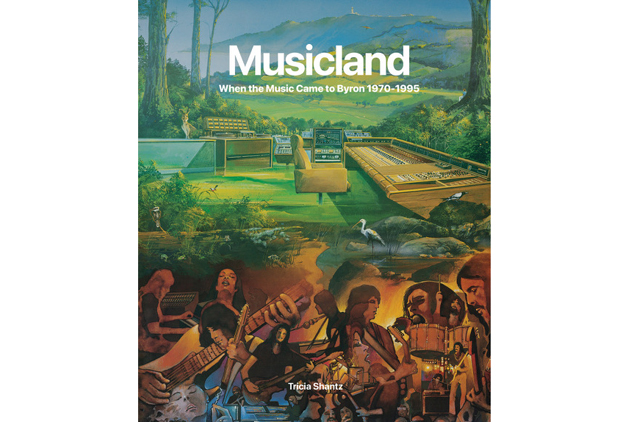
That remarkable period is the subject of Musicland: When the Music Came to Byron 1970–1995, a new book by author Tricia Shantz.
Published in August, the 276-page hardcover draws on 80 interviews to document the musicians, promoters, venues and recording studios that helped transform the Northern Rivers into a thriving creative community.
Shantz launched the book at the Byron Writers Festival in August, where she was joined by Goanna frontman Shane Howard, Mi-Sex keyboardist Murray Burns and veteran music industry figure Mark Pope to revisit the stories and personalities that shaped the era.
Central to the story is Music Farm, the recording studio established at Coorabell in May 1976 by Garry Deutsher.
Situated in the hinterland outside Byron Bay, Music Farm became an important destination for Australian musicians, offering a creative retreat away from the major cities. The studio remains operational almost 50 years after its establishment.
Deutsher recalls an unlikely encounter on a Byron Bay beach that helped set the studio in motion.
“Casually walking along the beach in Byron Bay one sunny day in the early ’70s I came across this eccentric, long-haired Englishman, Nick Butt,” he says.
Butt had recently arrived from London, where he had worked at the Middle Earth Club, providing lighting and sound for major international acts, including Pink Floyd.
“He casually mentioned that he had these huge studio speakers en route from the U.K. to Australia. They came from Abbey Road Studios and over some years had The Beatles blasting out. He asked if I wanted to use these speakers in Music Farm. This was the start.”
The story captures the unlikely collision of people, places and circumstances that helped make Byron Bay a musical destination.
As the region’s reputation grew, venues including the Arts Factory, Bangalow Bowlo, Everglades and locations around Mullumbimby and Billinudgel became part of a flourishing live circuit. Promoters such as Live Coverage, Encore Entertainment and Putty Productions helped bring touring acts to the area.
For many musicians, Byron offered something different from the established metropolitan music scenes: a combination of surf culture, alternative lifestyles and a community increasingly receptive to original Australian music.
Musician and Byron Music founder Pip Lee recognised the potential as early as 1969.
“Those early days, I think they were pioneering days in the Byron area,” Lee recalls. “It would have possibly been like Nashville in the early days when the music scene was in its infancy.”
Lee believed the region’s surfing culture would inevitably help fuel a musical explosion.
“I knew the Byron area was ripe and ready to explode like a mini-Nashville. The reason I was so sure there was going to be an explosion of music in Byron is because there was a surfing scene. It just had to happen.”
Shantz’s book brings together recollections from some of the most significant figures in Australian music, including Richard Clapton, Shane Howard, Rob Hirst, John Schumann, Tim Farriss and Reg Mombassa.
Redgum’s John Schumann contributes the foreword, while Powderfinger frontman Bernard Fanning has praised the book’s documentation of an often-overlooked chapter of Australian music history.
“It’s so great to have a comprehensive record of the contributions that Northern Rivers musicians and studios made to the Australian music canon,” Fanning says. “So many stories, so many big personalities.”
The book also traces the relationship between the Northern Rivers’ burgeoning music scene and the counterculture that had taken hold in the region during the previous decade.
That history was explored in Shantz’s earlier book, Neverland: American and Australian Surfers in Byron Bay in the 1960s & 1970s, published in 2022.
Featuring a foreword by actor and director Simon Baker, Neverland examined how Australian and American surfers helped transform Byron Bay from an industrial town, once dominated by its abattoir, into a centre of surfing, alternative culture and creative expression.
Together, the two books offer a portrait of Byron Bay before its transformation into one of Australia’s most expensive and internationally recognised coastal destinations.
While Neverland documents the arrival of the surfers and the cultural upheaval of the 1960s and ’70s, Musicland follows the musicians who helped give that emerging community its soundtrack.
To accompany the new publication, Shantz has assembled a two-and-a-half-hour Spotify playlist featuring music recorded at Music Farm or performed at venues throughout the region during the period covered by the book.
Accessible through a QR code in the publication, the playlist serves as an audio companion to the stories, revisiting a time when Australian bands were forging their identities on the road and building audiences one town at a time.
For anyone who remembers the days when the biggest names in Australian rock could be found playing a local pub or community hall, Musicland is a reminder of just how important the Northern Rivers became to the country’s musical history.
And for those who arrived after Byron Bay’s transformation into a global destination, it’s an introduction to a time when the region’s reputation was built as much on electric guitars, recording studios and late-night gigs as it was on surfboards and beaches.
Musicland: When the Music Came to Byron 1970–1995 is published by Surf Research and is available now. The 276-page hardcover retails for $85.
Further information is available at musiclandbook.com.au.