
“I want to do The Exorcist, but make it queer.”
That’s how writer-director Adrian Chiarella introduced his debut feature, Leviticus, at a special screening in Brisbane. It’s a neat elevator pitch for a film that blends supernatural horror with a deeply personal exploration of queer identity, repression and the lasting scars of religious intolerance.
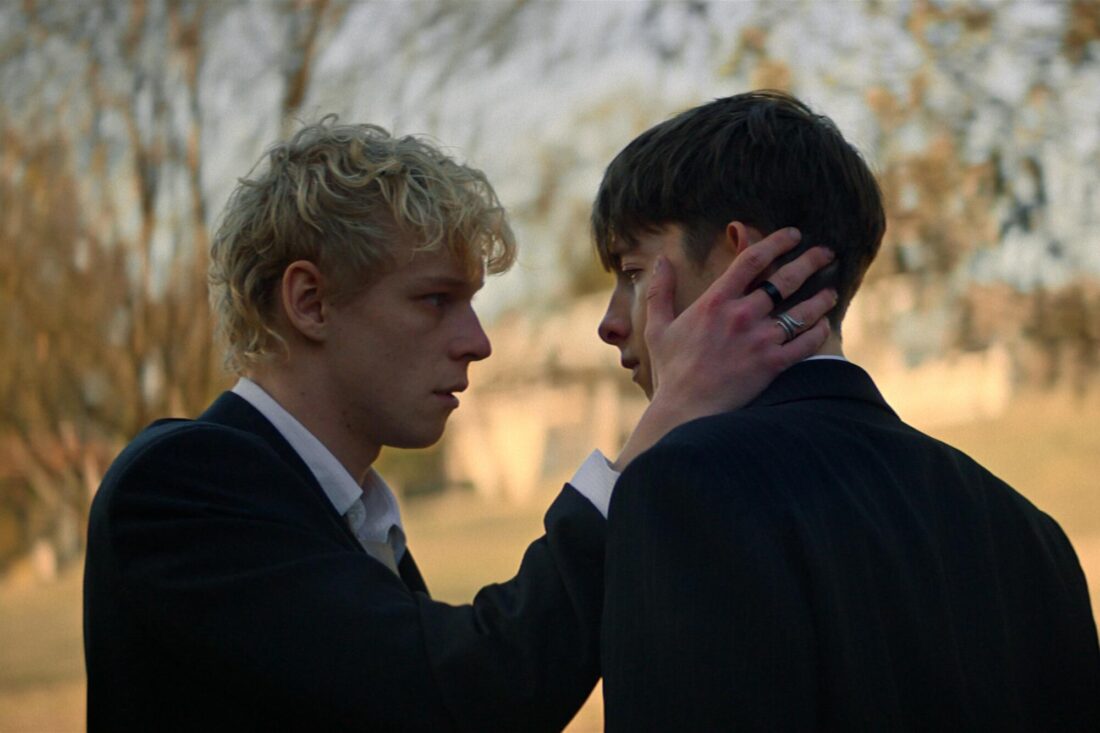
High school students Naim (Joe Bird) and Ryan (Stacey Clausen) are tentatively exploring their feelings for one another when jealousy tears them apart. After catching Ryan kissing Hunter (Jeremy Blewitt), Naim exposes the relationship to their deeply religious families. A self-styled Deliverance Healer (Nicholas Hope) is brought in to purge what they believe is sinful desire, unleashing an occult ritual that summons a demonic entity capable of assuming the form of the person each victim desires most.
The supernatural premise becomes an effective metaphor for the emotional damage caused by conversion therapy. Rather than relying solely on jump scares, Chiarella uses horror to externalise shame, repression and fear, creating a monster that feeds as much on emotional vulnerability as supernatural terror.
Ryan’s relationship with Hunter embodies a raw, physical expression of desire, standing in deliberate contrast to the quieter intimacy he shares with Naim. Chiarella explained this creative decision during the post-screening Q&A, saying: “These were young men. These characters would have their own way of expressing themselves, and it had to come from somewhere very primal.” That contrast gives the film an emotional texture that extends well beyond its horror framework.
The rural Australian setting also plays a vital role. Wide shots of abandoned mills, towering powerlines and empty country roads create an atmosphere of isolation without ever feeling overly stylised. Chiarella embraces familiar elements of Australian Gothic, but avoids reducing the landscape to cliché. Instead, the recognisable settings make the supernatural events feel unsettlingly plausible.
As the boys realise the entity assumes the form of the person they desire most, their relationship becomes increasingly complicated. They repeatedly push one another away in an attempt to stay safe, only to find themselves drawn back together. The monster functions as a powerful symbol of secret desire and the constant fear that accompanies lives lived in hiding. For both boys, their greatest comfort remains each other, even as that connection places them in greater danger.
Chiarella’s writing is at its strongest in the complexity of its supporting characters. Naim’s mother, Arlene (Mia Wasikowska), is consumed by grief and unwavering religious conviction, leaving her unable to recognise the harm she inflicts on her son. Her attempts to reconnect with Naim are repeatedly undermined by her refusal to truly hear him, culminating in the devastating decision to subject him to the Deliverance Healer’s ritual. In many ways, Arlene emerges as the film’s true antagonist. Wasikowska delivers a performance that is emotionally taut and deeply unsettling, portraying a woman whose certainty becomes its own form of cruelty.
Joe Bird also delivers an impressive performance. Although Naim’s betrayal sets the story in motion, Bird ensures the character never becomes irredeemable. His portrayal captures the confusion, guilt and loneliness driving Naim’s decisions, encouraging audiences to empathise with him even at his most frustrating. The emotional fractures between Naim and Ryan deepen further after Izzie (Davida McKenzie) reveals Naim’s betrayal, destroying the fragile trust that remained between them. Bird grounds every moment with enough vulnerability that audiences continue hoping for reconciliation, regardless of where the story leads.
While Leviticus certainly delivers its share of effective scares—including one sequence that visibly jolted the entire audience during the screening—its greatest strength lies elsewhere. Chiarella is less interested in frightening viewers than in exploring the emotional consequences of shame, rejection and failed support systems. By grounding its horror within recognisable relationships and everyday Australian settings, Leviticus becomes more than a supernatural thriller. It’s an assured debut that uses genre to examine the lasting psychological impact of intolerance, leaving audiences with something far more unsettling than the monster itself.
Ainsley Mura