
Baz Luhrmann Lets Elvis Speak Again in EPiC
By Sean Sennett
Baz Luhrmann has never been a filmmaker who thinks small. From the hyper-romantic sweep of Moulin Rouge! to the rhinestone-drenched spectacle of Elvis, the Australian auteur has built a career out of marrying emotional intimacy with widescreen storytelling. Now he returns to the King with EPiC, a new hybrid documentary-concert film that strips back the mythology to reveal Elvis Presley as audiences have never quite seen — or heard — him before.
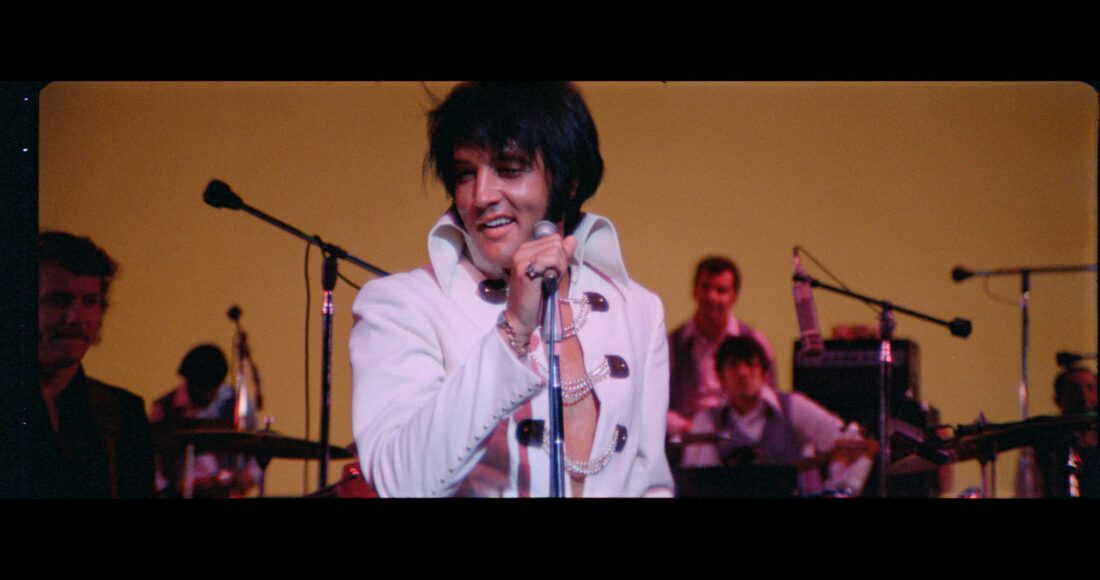
When we speak, Luhrmann is preparing for the film’s Australian premiere on the Gold Coast, where anticipation is running high. The project has already generated enormous buzz among Presley devotees and music historians alike. At its heart, EPiC is built around newly uncovered archival material — including rare interviews and a staggering 59 hours of performance footage — allowing Presley to narrate his own story.
“Elvis rarely did interviews,” Luhrmann explains, leaning forward with the enthusiasm of someone still surprised by what he’s uncovered. “They’re the hardest thing to find. They just don’t exist. But what we discovered were some very early ones where he really spoke his mind.”
Those early recordings, Luhrmann says, reveal a Presley who was funny, thoughtful and far more open than his carefully managed public persona ever suggested. Much of that silence, he notes, was shaped by Colonel Tom Parker, Presley’s famously controlling manager.
“The Colonel moved in very quickly and basically said, ‘Elvis, you don’t speak. Don’t go on chat shows. Let everyone talk about you,’” Luhrmann says. “So in many documentaries people talk about Elvis. But what this audio does is let him tell it from his side.”
That decision to foreground Presley’s own voice gives EPiC its emotional backbone. Luhrmann describes the film as an attempt to rediscover the human being behind the cultural icon — a performer who could feel disarmingly vulnerable offstage while transforming into something transcendent the moment the spotlight hit.
“He was goofy, he was funny. Those are real surprises,” Luhrmann says. “But on stage, it’s like being in his lounge room. Fans talk about having this deeper feeling for him. Even people who don’t necessarily love the music walk away saying, ‘Who was that guy?’”
Luhrmann is fascinated by the contradiction at Presley’s core: a man supremely comfortable performing, yet hesitant to engage in public discourse.
“In sanctioned interviews he would say, ‘I’m just an entertainer. I’ll keep my views to myself,’” Luhrmann explains. “But then he expresses everything through song.”
The film explores that emotional translation in striking ways. Presley’s response to the assassination of Robert F. Kennedy, for example, becomes a powerful moment in the narrative. According to Luhrmann, Presley channelled his grief and confusion into music almost immediately.
“When Robert Kennedy was shot, he [sang] ‘If I Can Dream,’” Luhrmann says. “Then there’s songs like ‘Walk a Mile in My Shoes.’ You listen to those lyrics and think about the world we’re living in now — and you realise how timeless that message is.”
The discovery of the film’s visual material feels almost mythical. Luhrmann describes stumbling across the Presley archives as akin to a cinematic treasure hunt worthy of Indiana Jones.
“It was a shock,” he says. “It was like opening the Ark. The footage was in salt mines in Kansas City where the old MGM archive was stored. Some of it was rotting. Some boxes were mixed up. Some material had even been stolen. But there was so much there.”
The scale of the footage presented both opportunity and challenge. Much of the audio was incomplete or damaged, forcing Luhrmann and his team into an obsessive restoration process that included sourcing rare recordings from collectors and even tracking down unofficial recordings to rebuild the live performances.
“We asked ourselves, do we simply restore the past, or do we create something new?” Luhrmann says. “In the end, we thought, ‘What would Elvis do?’ And Elvis was always about innovation.”
That philosophy led to an ambitious sonic overhaul. The film’s soundtrack has been remixed for modern theatrical sound systems, including IMAX presentation, while carefully preserving the integrity of Presley’s original performances.
“His voice is extraordinary,” Luhrmann says. “The band is incredible — Ronnie Tutt on drums, James Burton on guitar. Sometimes we had to rebuild damaged instrumentation, but the goal was always to keep Elvis front and centre.”
One of the film’s emotional high points involves newly enhanced gospel recordings, including a collaboration with a contemporary choir inspired by Presley’s lifelong connection to spiritual music.
“There’s a version of ‘Oh Happy Day’ in the film that feels like Elvis singing with the greatest gospel choir in the South right now,” Luhrmann says. “It’s incredibly moving.”
While EPiC celebrates Presley’s legacy, Luhrmann is adamant about one thing: authenticity. At a time when artificial intelligence is increasingly reshaping archival storytelling, the director stresses that every moment in the film is drawn from real performance material.
“There’s not a frame of AI in this movie,” he says firmly. “The only visual and sonic effect is the effect Elvis had on an audience.”
Asked to nominate a single Presley performance he wishes he could have witnessed firsthand, Luhrmann doesn’t hesitate. He points to the legendary opening night of Presley’s 1969 Las Vegas residency — a comeback moment widely regarded as one of the greatest live performances in popular music history.
“I spoke to Clive Davis, who was there that night,” Luhrmann says. “He told me it was still the greatest show he’s ever seen. Elvis was doing cartwheels. He said you could feel the electricity in the room.”
That sense of immediacy is precisely what Luhrmann hopes audiences experience when they watch EPiC. More than a documentary, he sees the film as an immersive encounter — a chance to rediscover Presley not as a historical figure but as a living, breathing performer.
“You’re not watching history,” Luhrmann says. “You’re in the room with him.”
As Presley’s voice reverberates through restored recordings and towering cinema sound systems, EPiC suggests that the King’s greatest power wasn’t simply his music, but his ability to connect — emotionally, physically and spiritually — with audiences across generations.
EPiC opens in cinemas on February 19