
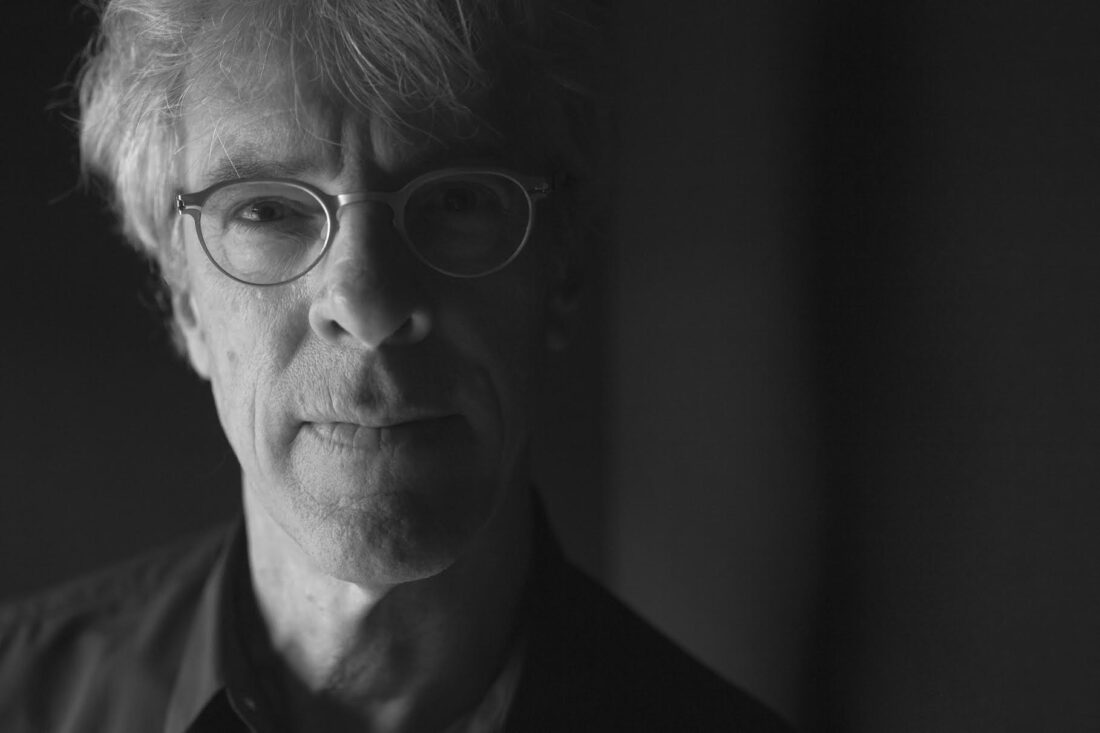
Stewart Copeland: Banging the World Into Shape
Stewart Copeland has never lacked an origin story. Born into a world of geopolitics and espionage—his father a CIA operative, his mother analysing enemy rail networks during World War II—Copeland grew up with a front-row seat to the messy machinery of power. Dinner-table conversations, he recalls, weren’t about neighbourhood gossip or domestic politics, but global chess moves, dictators and destabilised regions. “It was an amoral time,” he says, shrugging. “They were all sons of bitches—but let them be our sons of bitches.”
That restless, international upbringing wired him for motion. But the real detonation—the “big bang,” as he puts it—came when he first attacked a snare drum as a kid. Late to puberty and impatient to feel grown, Copeland found instant transformation behind the kit. “I became an 800-pound silverback,” he laughs. “Instant masculinity.” The drums didn’t just give him power; they gave him purpose. And, crucially, they made Janet McRoberts dance. At 12 years old, Copeland was sold.
That mix of self-awareness, bravado and total irreverence still defines him today, as he prepares to tour Australia with Have I Said Too Much? The Police, Hollywood & Other Adventures—a one-man storytelling show that sits somewhere between stand-up comedy, rock history seminar and confession booth. It began, he says, as a conversation with a host. Then it ballooned. “I did England and ended up doing two hours with about eight questions,” he says. “Each one led to twenty minutes of babble. But it worked.”
The show, like Copeland himself, thrives on momentum and instinct. There are photos, occasional audio-visual flourishes, and just enough teasing to keep the stories dangling. “You’ll have to buy a ticket to find out,” he grins, referencing a now-infamous early Police TV appearance involving blonde wigs, a gorilla mask and at least one bass player painted green.
That sense of chaos was always baked into The Police. Copeland famously declared the band punk before it really was one, writing a manifesto and forming a group around limited skills and boundless ambition. “I knew four chords,” he admits. “Which is one more than you need for punk.” When he rang Sting—then a jazz musician in Newcastle—Copeland sold him a future. “We’re going to conquer the world,” he told him. Against all odds, the bullshit came true.
The early years were brutal: starvation gigs, sceptical London tastemakers branding them “fake punks,” and a constant struggle to be taken seriously. Everything changed when Andy Summers joined. “Andy knew nine or ten chords,” Copeland says. “That’s when Sting’s ears pricked up.” Suddenly, real songs emerged. Copeland’s own early punk numbers—titles like Clown’s Revenge—were quietly retired. “In came ‘So Lonely,’” he says. “And that was a no-brainer.”
Looking back through his old diaries, recently published, Copeland noticed something telling. The early setlists were written in his handwriting. Then, at a certain point, they weren’t. “They were in Sting’s handwriting,” he says. “And my feeling was relief.” The shift marked Sting leaning in creatively, no longer being dragged along by Copeland’s vision, but pulling the band forward himself. “I don’t need to be the boss,” Copeland shrugs. “I just want it all to happen.”
That dynamic—Copeland as propulsion, Sting as architect—became The Police’s engine. The band recorded at speed, often laying down drum takes within twenty minutes of hearing a song for the first time. “Whatever I put down in those three and a half minutes—that’s what’s on the record forever,” he says. Fans later analysed his parts with academic intensity, but Copeland insists it was pure instinct. “Shoot from the hip,” he says. “Entirely creative.”
That approach reached a boiling point on Every Little Thing She Does Is Magic. Sting arrived with a demo so complete it could have been released as-is. The band tried to “Police-ify” it—reggae, jazz, anything—but every deviation dulled its power. Eventually, a grumpy, over-caffeinated Copeland gave in. “Just play your stupid demo,” he snapped. The result, recorded amid mutual irritation, became one of the band’s most enduring songs. “That’s the Police formula,” he laughs. “Both of us screaming at each other.”
The Police famously ended at their peak, avoiding the long downward arc that claims most bands. “We were lucky,” Copeland reflects. “We never saw the other side of the parabola.” The aborted attempts at new music years later only underlined how different their motivations had always been. “Sting writes songs about something,” Copeland says. “I bang shit. The song is gasoline for the band. I don’t care what it means—I care how it feels.”
That philosophy carried Copeland into an entirely new career as a film composer, beginning with a call from Francis Ford Coppola. Instead of asking for instrumentation, Coppola asked for emotions. “I need to feel her love,” Copeland recalls. “But she’s afraid.” The lesson was transformative. Twenty years as a “flinty-eyed hired gun” taught him how music manipulates feeling, how orchestration works, and how discipline replaces instinct when necessary. These days, he writes confidently for full orchestra—another hidden facet of a musician best known for controlled mayhem.
For all his openness to change, Copeland remains pragmatic about modern music. He admires artists like Kendrick Lamar for their emotional impact, even if no one’s physically playing an instrument. “Music can be made all kinds of ways,” he says. Still, he understands why younger listeners gravitate back to bands like The Police, Zeppelin and The Beatles. “Around the year 2000,” he notes, “kids realised the original was better than the derivative.”
That rediscovery, he believes, is part of why The Police endure. Not because they set out to make timeless art—“We thought it’d be consumed like a sandwich and forgotten”—but because something honest slipped through. And honesty, Copeland insists, was always the band’s core. “There’s deep love and respect among us,” he says. “That’s why we can take the piss.”
Words: Sean Sennett
Photos: Rossano Ronci
HAVE I SAID TOO MUCH? AUSTRALIA & NEW ZEALAND TOUR DATES 2026
Sunday, January 11 — Regal Theatre, Perth
Wednesday, January 14 — Forum 2, Melbourne
Friday, January 16 — State Theatre, Sydney
Saturday, January 17 — The Tivoli, Brisbane
Tuesday, January 20 — Opera House, Wellington
Wednesday, January 21 — Bruce Mason Centre, Auckland
Tickets & tour information:
www.birdsrobe.com