
It’s Saturday night at HOTA on the Gold Coast and Baz Luhrmann is standing in
front of a packed cinema. At the AACTA Festival, the premiere of EPiC, his
ambitious new Elvis Presley concert documentary, has just wrapped to a rapturous,
sold-out crowd, and the famed Australian director is still riding the emotional surge
of seeing the film with an audience for the first time on home soil.
“I didn’t expect that reaction at all,” Luhrmann admits, slightly stunned. “I’d only
seen it play in Toronto before. But something happens when people in the seats
forget they’re watching a movie and start feeling like they’re actually [at a concert].
That’s the most fulfilling thing you can accomplish with a film like this.”
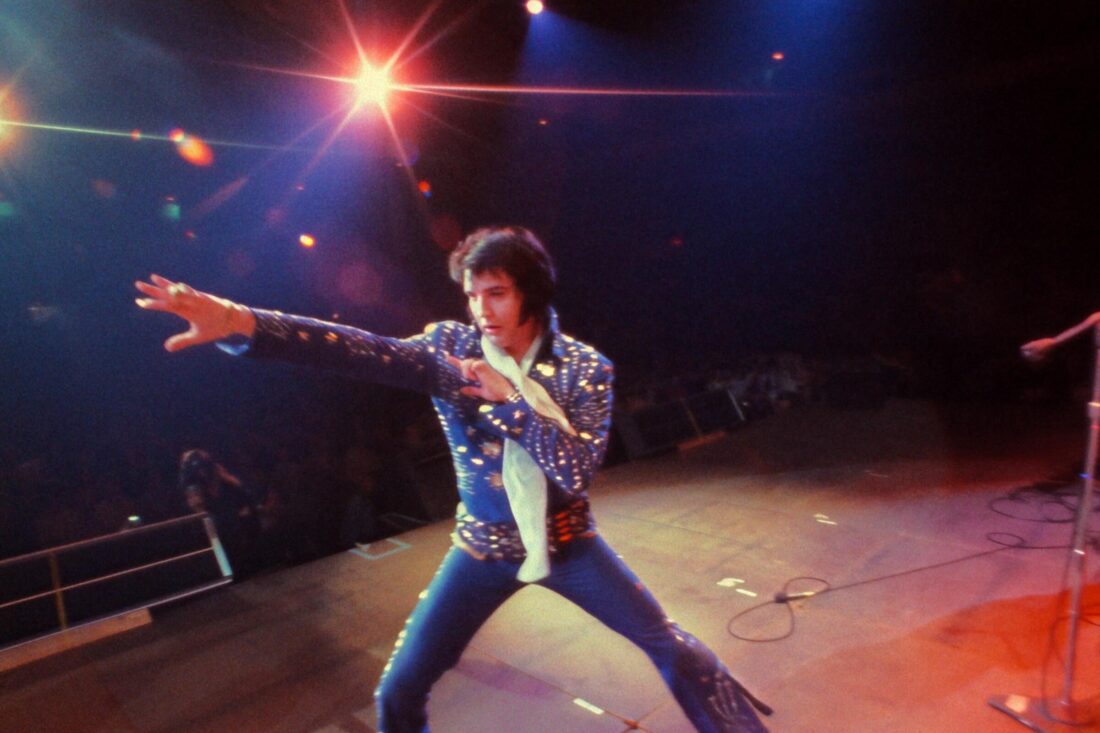
EPiC is not your traditional rock documentary. Nor is it simply a concert film.
Instead, Luhrmann has created a sweeping, immersive cinematic experience built
around some rare and previously unseen footage of Elvis Presley performing during
his peak touring years. It’s a project that Luhrmann insists almost never existed.
“This was completely accidental,” he says with a laugh. “It began when I was
making Elvis — the narrative film. There was talk about these rumoured lost reels
of concert footage. I thought maybe there’d be a few shots we could use as
background or reference material.”
What followed sounds like the opening act of an Indiana Jones sequel.
“All of MGM’s old film footage is stored deep underground in Kansas City in salt
mines to protect it from moisture,” Luhrmann explains. “We sent people down there
to look, not expecting much. Then they kicked open this dusty storage room and
found 67 boxes labelled Elvis – That’s The Way It Is, Elvis On Tour and more. It
was like discovering buried treasure.”
The find delivered pristine visual footage — but there was a catch.
“We had picture but no sound,” he says. “And once word leaked out that this
footage existed, fans started demanding it be released. Letters, social media,
everything. We realised we couldn’t just put it back in the vault.”
What followed was a painstaking two-year global search to reconstruct the audio,
sometimes involving unlikely encounters.
“There’s a lot of bootleg Elvis material out there,” Luhrmann says with a wry nod.
“Let’s just say there were moments where we were meeting collectors in car parks
trying to track down original recordings. It sounds exaggerated, but it really
happened.”
The restoration effort became a massive technical and artistic undertaking. Some
recordings were salvaged from original stage audio, while other sections required
meticulous reconstruction.
“There were tracks where microphones had failed or orchestration recordings were
corrupted,” Luhrmann explains. “So in some cases, we worked with gospel choirs in
Nashville to re-imagine elements of performances. We weren’t trying to fake history
— we were trying to honour what Elvis was creating emotionally and spiritually.”
The real breakthrough moment for EPiC, however, came when Luhrmann
uncovered something far more revealing than lost concert audio — a previously
unheard 50-minute tape of Elvis speaking candidly about his life.
“That changed everything,” Luhrmann says. “Elvis was famously guarded in
interviews. But on this tape, he’s completely unfiltered. He talks about his
experiences, his fears, his beliefs. That’s when I realised this film needed to let
Elvis tell his own story.”
Luhrmann built the documentary around that concept — Presley narrating his own
journey through performance and reflection.
“I imagined Elvis inviting the audience into his personal performance space,” he
says. “Whenever Elvis couldn’t say something directly, he sang it. So the songs
become his emotional autobiography.”
That emotional vulnerability, Luhrmann believes, is key to understanding Presley’s
enduring power.
“I’ve always felt there was this incredibly sensitive and insecure human being off
stage,” he says. “But when he stepped into performance, he transformed into one
of the most magnetic artists in history. That contrast fascinated me.”
Luhrmann recounts conversations with people who knew Presley personally,
including childhood friend Sam Bell who described a young Elvis growing up in
poverty and wrestling with feelings of shame about his family’s struggles.
“They told me Elvis was extraordinarily kind,” Luhrmann says. “They said he would
call their grandparents ‘sir’ and ‘ma’am’ — something they’d (as black Americans)
never experienced from a white child in that era. Those stories stayed with me.”
“We tried to let empathy and kindness flow through the film. Songs like Walk A Mile
In My Shoes aren’t just performances. They’re statements about who Elvis was as
a person.”
Despite the film’s massive archival scope, Luhrmann describes the creative
process as one of the most enjoyable of his career.
“I didn’t have to worry about casting or creating a star,” he says. “I had the greatest
performer in music history already at the centre. My job was simply to get out of the
way.”
The project also brought together Baz’s trusted creative team, including composer
Elliott Wheeler, whose score was recorded on the Gold Coast.
“It was incredible,” Luhrmann says. “We’d be working in the studio surrounded by
kangaroos outside. That’s about as Australian as filmmaking gets.”
Now Luhrmann is going on an international promotional tour he jokingly describes
as “the world tour Elvis never had.”
“Elvis famously never toured internationally during his lifetime,” he says. “This film
is our way of letting his performance finally travel the world.”
While Luhrmann insists EPiC is only one interpretation of Presley’s legacy, he
admits the King of Rock and Roll has permanently altered his creative life.
“I thought making Elvis would close that chapter,” he says. “But now I realise he’ll
probably never leave me creatively — and honestly, that feels like a privilege.”
Sean Sennett
EPiC is streaming now.