
RED, WHITE AND THE BLUES THE WHITE STRIPES
by Sonic Sally
The first band to put Detroit back on the map since the heady days of The Stooges and The MC5, The White Stripes have taken rudimentary rock all the way to the top of the charts.
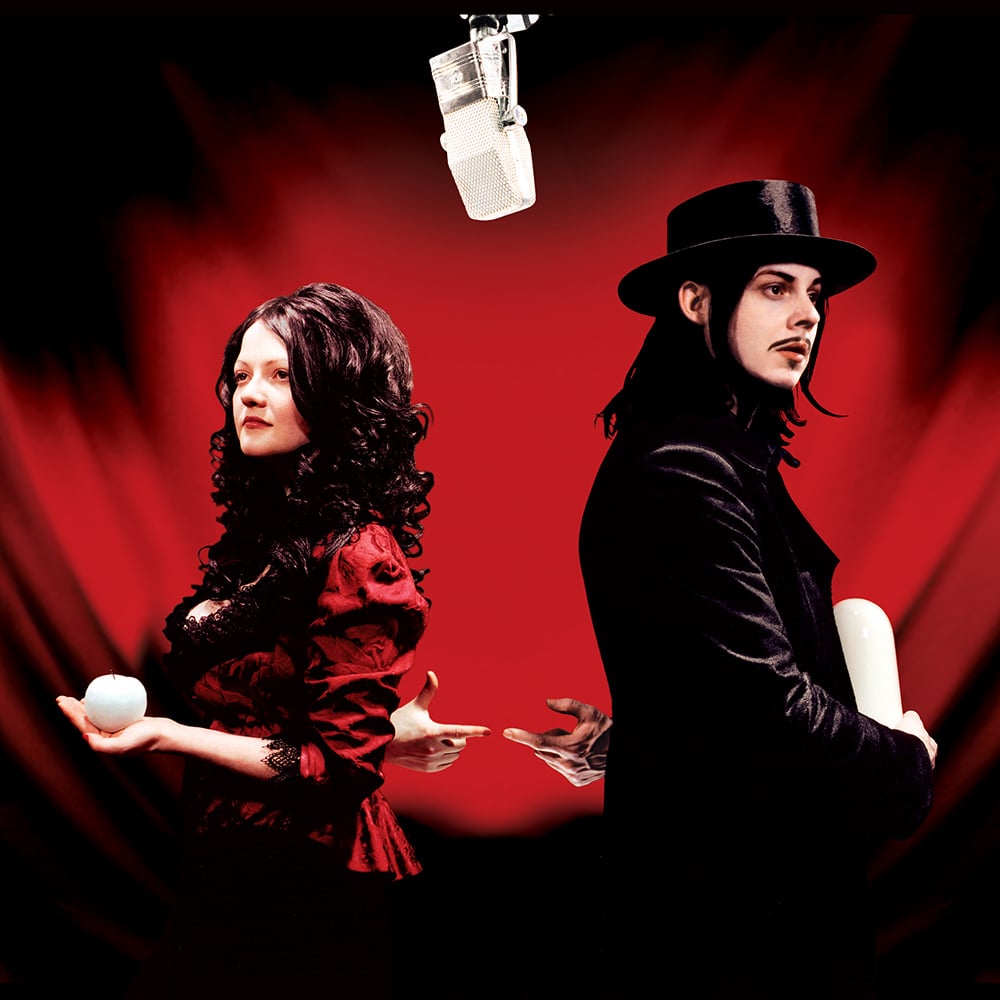
Their fifth album, Get Behind Me Satan, looks set to continue that trajectory on its release next week.
The rock duo turned phenomenon – guitarist/vocalist Jack White and minimalist drummer Meg White – have certainly travelled an unexpected career path since they formed on Bastille Day in 1997. Success still comes as a surprise to the pair, who’ve said they thought they’d never play to more than about 50 punters in some Motor City dive for the rest of their days.
Now with a hefty reputation as garage rock revivalists, the fledgling White Stripes first found receptive ears for their stripped back, bluesy rock sound on Long Gone John’s highly regarded Sympathy For The Record Industry label. Their trademark red-and-white clothes set them apart, as did the red-and-white peppermint candy that defined their artwork.
On their self-titled debut in 1999, Jack’s primitive riffs referenced the warped blues of Jimmy Page as much as it did the folk-blues of Blind Willie McTell. From the beginning, covers shed light on the band’s inspiration – check out Robert Johnson’s ‘Stop Breaking Down’ and Bob Dylan’s ‘One More Cup Of Coffee’ on this first album. They would later lend irony to Dolly Parton’s famous ‘Jolene’.
De Stijl saw The White Stripes tour Australia for the first time, playing seven shows in six days in Melbourne, with one at Raoul Records to an audience of only 20, including several Bad Seeds. Taking its title from a Dutch art movement (the literal translation is “the style”), their second album plied some of music’s richest strains: blues, ’60s pop and classic rock’n’roll. From the garage hip-shakin’ of ‘Hello Operator’ to the lost-my-baby blues of ‘Death Letter’, Jack’s guitar playing was lean and twisted and Meg’s drumming frugal and dirty.
Third album White Blood Cells made The White Stripes’ name worldwide, propelling them onto Late Night with David Letterman and the pages of just about every major magazine from NME (on the cover, rare for a band without a UK record deal at the time) to Time. Selling more than one million copies, it led to a big-dollar major label deal with The Prodigy’s XL Recordings. When ‘Fell In Love With A Girl’ gained heavy rotation on MTV, they really hit the big time.
At the forefront of the new wave of rock’n’roll bands, along with The Strokes and The Hives, The White Stripes kept in touch with their roots. White Blood Cells was dedicated to country warbler Loretta Lynn, whose 2004 album Van Lear Rose Jack White would go on to produce and co-write. They also took the opportunity to give a leg up to fellow Detroit scenesters The Von Bondies, The Dirtbombs and Soledad Brothers, taking them on tour.
The Aussie rockers The Datsuns also rose to fame on The White Stripes’ coattails, supporting them in the UK. The bands became acquainted when Jack and Meg returned to Australia for the 2002 Big Day Out, east coast club shows and an intimate Triple J Live at the Wireless recording in ABC’s Sydney studios.
Fame put The White Stripes’ personal lives in the spotlight, forcing them to weather a furore over whether they actually were brother and sister. Internet reports claimed the authenticity of a 1997 marriage certificate and subsequent divorce, but the band remained tight-lipped on the subject.
Their music, however, continued to gain new fans. John Peel, a man renowned for not jumping on bandwagons, declared: “I’ve not been affected by anything as much as this since punk, perhaps even since I first heard Jimi Hendrix.” Ryan Adams said they made him “want to eat crack pipes and dance with the voodoo bones of the dead”, until the British press succeeded in creating a feud between them.
In 2003, Elephant made The White Stripes fully fledged stars, entering the Australian album chart at number four, the US chart at number six and the UK chart at number one. Shortly afterwards, Jack appeared in the movie Cold Mountainalongside Nicole Kidman and Jude Law. Then there was the fist-fight with The Von Bondies’ Jason Stollsteimer over whether Jack had produced their first album or not.
Notoriety aside, Elephant maintained the simplicity of their music and their DIY aesthetic – it was recorded in 10 days for less than £5000. It was cut in East London’s analogue Toe Rag Studios, which famously holds no equipment made after 1963. A mix of pop and barrelling garage blues, the album featured a few curios: the very Queen-esque ‘There’s No Home For You Here’, Meg-sung ‘In The Cold, Cold Night’ and a three-way call-and-response, ‘It’s True That We Love One Another’ (with British garage rock royal Holly Golightly).
Now with a major and accused by some of their Detroit brethren of being sell-outs, they nevertheless continued to refuse lucrative ad contracts – including one from a toothpaste manufacturer, which had to settle on the decidedly less attractive product name of ‘White Strips’.
On the back of Elephant came a live DVD, Under Blackpool Lights, featuring 26 songs captured on grainy Super-8.
Also in 2003, The White Stripes had to take a break from touring because Meg slipped on an icy surface and broke her arm, and Jack broke his left index finger in three places in a car accident. They were back on the road in time for another Australian tour in October, playing the Livid Festival in three states.
Two years later, The White Stripes return with their most diverse offering to date. Featuring lead piano instead of Jack’s strident blues riffs, Get Behind Me Satan is also big on falsetto and marimba. But read between the mostly acoustic lines and you’ll hear the same powerful simplicity and quintessential charm that’s taken the band from the backwoods to the world stage.
(Time Off, June 07, 2007)