
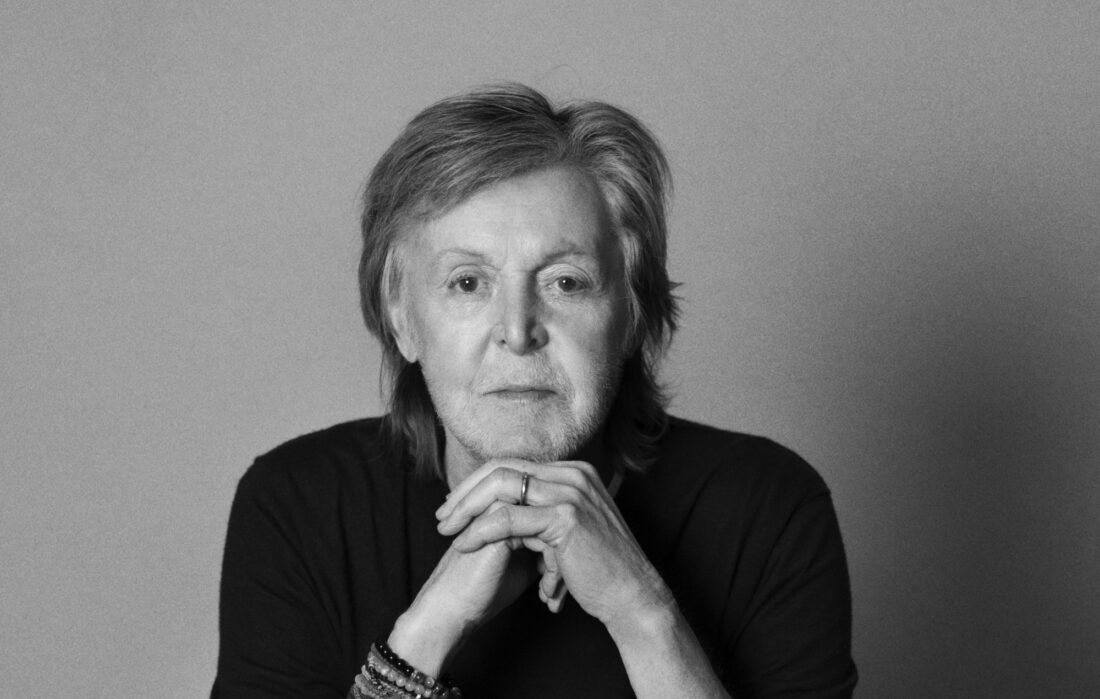
Paul McCartney Goes Back to the Beginning
By Peta Kent
For most artists, nostalgia eventually becomes a trap. A place to revisit old triumphs, replay familiar stories and carefully preserve mythology. But on The Boys Of Dungeon Lane, Paul McCartney approaches memory differently. Less as celebration, more as excavation.
The first solo album from McCartney in over five years is also perhaps the most revealing record of his long career — a deeply personal collection of untold stories, private recollections and newly inspired love songs from one of the defining cultural figures of the modern era. Across the album, McCartney turns the lens inward, revisiting the formative years that shaped not only his life, but the very foundations of popular music itself.
This is the story before THE story.
Long before the hysteria of Beatlemania, before Shea Stadium, before the mythology calcified into cultural history, there were simply boys wandering post-war Liverpool carrying guitars and impossible dreams. The Boys Of Dungeon Lanelives inside those years.
The album arrives surrounded by enormous anticipation. For Beatles fans, historians and casual listeners alike, McCartney’s memories remain endlessly fascinating because they sit at the centre of one of the most examined creative explosions in modern history. But what makes this record so affecting is the way McCartney refuses to treat those memories like sacred relics. He approaches them not as folklore, but as lived experience.
These songs feel startlingly intimate.
Across recent interviews surrounding the album’s release, McCartney has described finding himself unexpectedly drawn backward while writing.
“I didn’t think I was doing that, but once I looked at all the songs I’d recorded for this album, a lot of them are backward looking — but then I thought, what else is there?” he told NME. “Maybe I’m at a sentimental point in my life when I think of things like Liverpool, because a lot of memories will include John and George [Harrison]. The fact that they’re not with us anymore makes it even more emotional to be here and to think about them in songs.”
That emotional openness runs through the entire record.
McCartney writes with unusual vulnerability about his childhood in Liverpool, the resilience of his parents during post-war England and the friendships that unknowingly helped reshape global culture. John Lennon and George Harrison appear throughout the album not as icons frozen in history, but as young men still inventing themselves — joking, experimenting, dreaming about escape.
The album’s title comes from one of its emotional centrepieces, Days We Left Behind, a stripped-back and deeply reflective track that captures the spirit of the project. Dungeon Lane itself remains a real place McCartney still passes when returning home to Liverpool — a symbolic gateway to the world before fame arrived.
Throughout the album, McCartney repeatedly returns to sensory memories: afternoons near the River Mersey, birdwatching books tucked under his arm, smoky bars, cheap guitars and endless conversations about music and possibility. There’s a cinematic quality to the songwriting, but the emotional power comes from the details feeling so ordinary.
That ordinariness matters.
For decades, Beatles history has often been framed in almost mythological terms, as though cultural revolutions arrive fully formed. The Boys Of Dungeon Lane quietly argues the opposite. McCartney seems fascinated by the fragile, uncertain years before history announces itself — the unguarded moments that later become destiny.
Musically, the record mirrors that intimacy.
Rather than chasing grand modern production trends, McCartney leans into warmth, texture and imperfection. Several tracks reportedly began as loose home recordings before expanding organically in the studio. Tape hiss remains. Vocals crack slightly. Instruments drift in and out of focus. The album often sounds less like a polished commercial product than memories captured in real time.
That looseness recalls some of McCartney’s most beloved solo work, particularly RAM and McCartney II, where spontaneity and experimentation mattered more than perfection. But The Boys Of Dungeon Lane feels more emotionally direct than either of those records.
At 84, McCartney’s voice has inevitably changed. It’s deeper now, more fragile in places, carrying the weight of experience. Crucially, he makes no attempt to disguise that reality. Instead, the ageing voice becomes part of the album’s emotional architecture.
“There’s emotion in age,” McCartney said recently while discussing the record. “You sing differently because you’ve lived differently.”
That may ultimately be what gives The Boys Of Dungeon Lane its unusual resonance. This isn’t an artist trying to recreate youth. It’s an artist trying to understand it.
And despite the reflective mood, the album never collapses into melancholy. McCartney still sounds creatively restless. Songs wander unexpectedly into strange chord changes, melodic left turns and bursts of surreal humour. The instinct that once made Beatles records feel so alive remains entirely intact.
For all the history surrounding Paul McCartney, perhaps the most surprising thing about The Boys Of Dungeon Lane is how human it feels. Beneath the mythology, the impossible catalogue and the cultural canonisation remains the image of a boy from Liverpool trying to make sense of memory before it disappears completely.
Photo: Mary McCartney MPL