
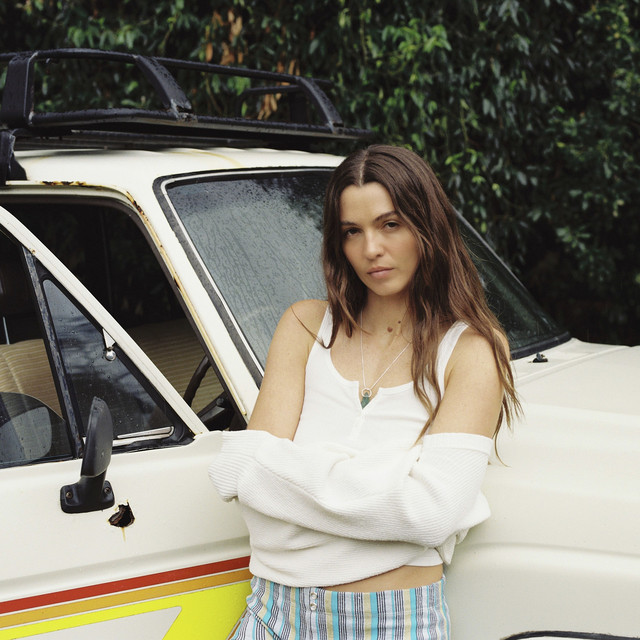
Kita Alexander Learns to Live With Her Anger on RAGE
For much of her career, Kita Alexander has written songs about love, longing and relationships. Her music has earned hundreds of millions of streams, ARIA nominations and support slots with some of the biggest names in pop. But with her second album, RAGE, the Byron Bay singer-songwriter found herself confronting something she had spent much of her life avoiding.
Anger.
“I came to realise within myself that I’d been avoiding the feeling of anger and rage,” Alexander says. “A friend pointed it out to me and I was like, ‘Whoa, I really do do that. I avoid ever going to that emotion.'”
The album, released through Warner Music Australia, is both a reckoning and a release. Recorded with producer Chris Collins at his Major Label Records studio in the Byron Bay hinterland, RAGE strips away much of the polish associated with contemporary pop in favour of organic instrumentation, live performances and emotional honesty.
The setting itself became part of the record.
“It’s this amazing studio up in the hills overlooking Australian bushland,” she says. “I think it’s the best studio in terms of vibes. A lot of studios you’re boxed in, but I love his studio because you’re overlooking mountains, trees. It’s amazing.”
The seeds of RAGE were planted more than two years ago when Alexander wrote “Press Pause” and “I Don’t Want To Go Home.” But the song that ultimately unlocked the album was “Avoidance,” written with longtime collaborator Shungudzo Kuyimba.
“I said, ‘Oh, I don’t like therapy. I’d rather just park it there. I’m really good at just parking things and not looking at it.’ She said, ‘Let’s write a song about that.'”
Listening back to the song proved confronting.
“I think I had my hands over my eyes like, ‘Oh my God, what is up with me? What am I avoiding? Why did I write this song?'”
Alexander believes songs often reveal truths before she consciously understands them.
“I do believe for me sometimes songs prematurely predict my future in a weird way. What comes out of me knows it needs to come out before I’m even aware of it consciously.”
As more songs emerged, a theme began to reveal itself.
“The Good House” explored the tension between appearances and reality.
“It’s this feeling of feeling like you present one way, but really your internal world’s falling apart.”
Originally, the album carried a different title.
“The record originally was going to be called Miss Australia, which is also another title of a record which I love.”
But as Alexander attempted to explain the project, she found herself returning to the same ideas.
“I’m presenting one way but not feeling that way on the inside. I don’t want to look through the world through rose-coloured glasses. I want to be real with myself. I want to take them off and confront what’s underneath.”
Ironically, the song “Rage” was the last one written.
The title change came only after filming its video.
“I literally called the label and I was like, ‘I want to change. I want to pivot the record title.’ Everyone loved it. Everyone thought it made total sense.”
Much of the album’s emotional power comes from Alexander’s willingness to discuss feelings that women are often encouraged to suppress.
“I think women in this world don’t get to just experience anger because it’s not a pretty emotion. We’re not supposed to be seen with it on camera or there has to be a big reason for it.”
For Alexander, anger doesn’t necessarily require an explanation.
“Sometimes I can just wake up angry. Sometimes it’s just an emotion.”
She traces some of those feelings back to childhood.
“My dad would always say, ‘You would never smile.’ He has this digital photo frame and I’m at the beach frowning, I’m at Disneyland frowning.”
Even now, she says, her father notices when she doesn’t smile in photographs.
“I remember one Christmas recently I was just doing a very soft smile and he was like, ‘You okay? What’s wrong?'”
The irony isn’t lost on her.
“My daughter, when she was born, she was born frowning and we took so many photos of that frown. Her frowning is one of our favourite things ever.”
Visually and sonically, RAGE reflects this process of stripping away artifice.
“I had the imagery in my head, I had the colours in my head, I had the sounds in my head before the themes necessarily.”
Alexander deliberately avoided synthetic textures.
“I wanted all the instrumentation to be organic. I didn’t want computer sounds. I wanted to be more raw with my vocal.”
The visual palette followed.
“The greens and the blues and the browns. To me that just screams nature, screams organic.”
Even her clothing became part of the concept.
“We wanted what I’m wearing in the album to coincide with how I am day to day, which is a singlet and jeans. Very stripped back, very me, very real.”
As those layers disappeared, something else emerged.
“I’m stripping everything back, taking away all the layers that I don’t always identify with anyway, and then what’s underneath is this simmering rage.”
The album arrives after Alexander spent much of the past year touring, including opening for Dua Lipa on her Australian dates.
The experience reignited ambitions she admits had become dormant.
“It made me really want that for myself.”
Standing before thousands of people every night brought back dreams she had spoken about early in her career.
“When I was signing record deals and having meetings with record companies, I said to all of them, ‘I want to be in arenas.'”
Motherhood and life had changed those ambitions.
“I suppose taking time away, being a mum, only having one foot in, one foot out of music, I think I forgot that part of my dream.”
Supporting Dua Lipa changed that.
“I got off stage and I was like, ‘Yep, I want that for me.'”
As for the anger that inspired the album, Alexander isn’t interested in letting it go.
“I’m really in the middle of it. I’m wholeheartedly accepting it.”
She describes herself as being in an “integration phase.”
“I don’t want to let it go. I want to hold on to it in a sense of allowing it to be in my life.”
Meditation has become an important tool.
“Meditation for me is a really big part to come back to my breath, calm myself down and obviously accept the rage, accept the anger, but then on the other side let it move through and not let it stagnate and fester.”
For an artist who spent years trying to avoid difficult feelings, RAGE represents something more than a collection of songs.
As Alexander puts it simply: “It just feels a lot more authentic
RAGE is out now through Warner Music